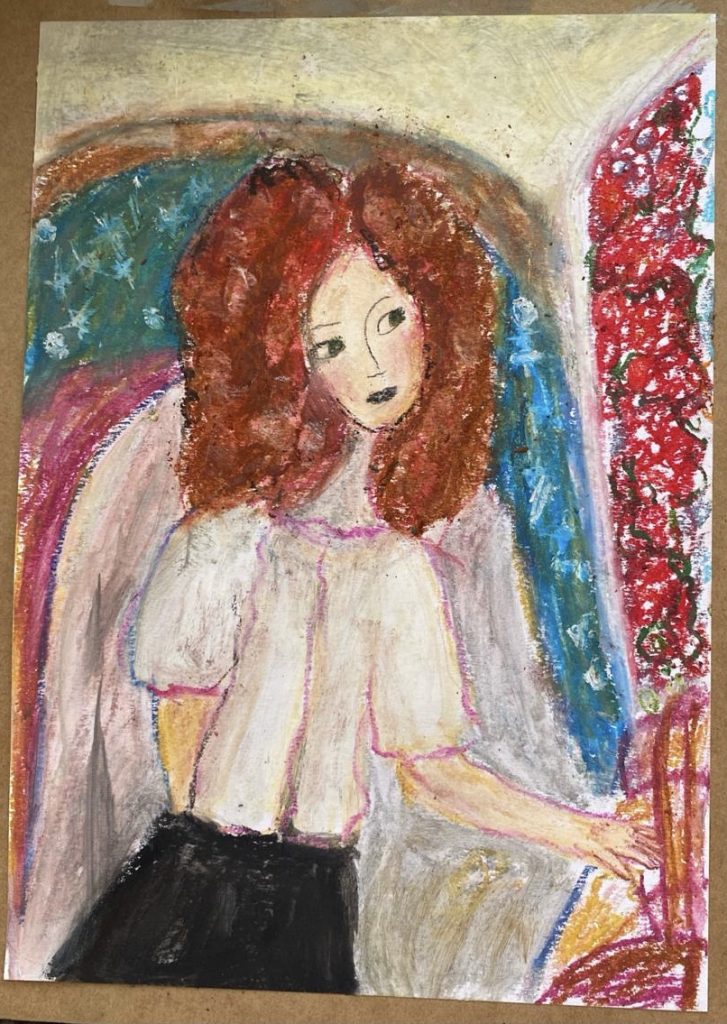
Mala Crna Haljina
Reply
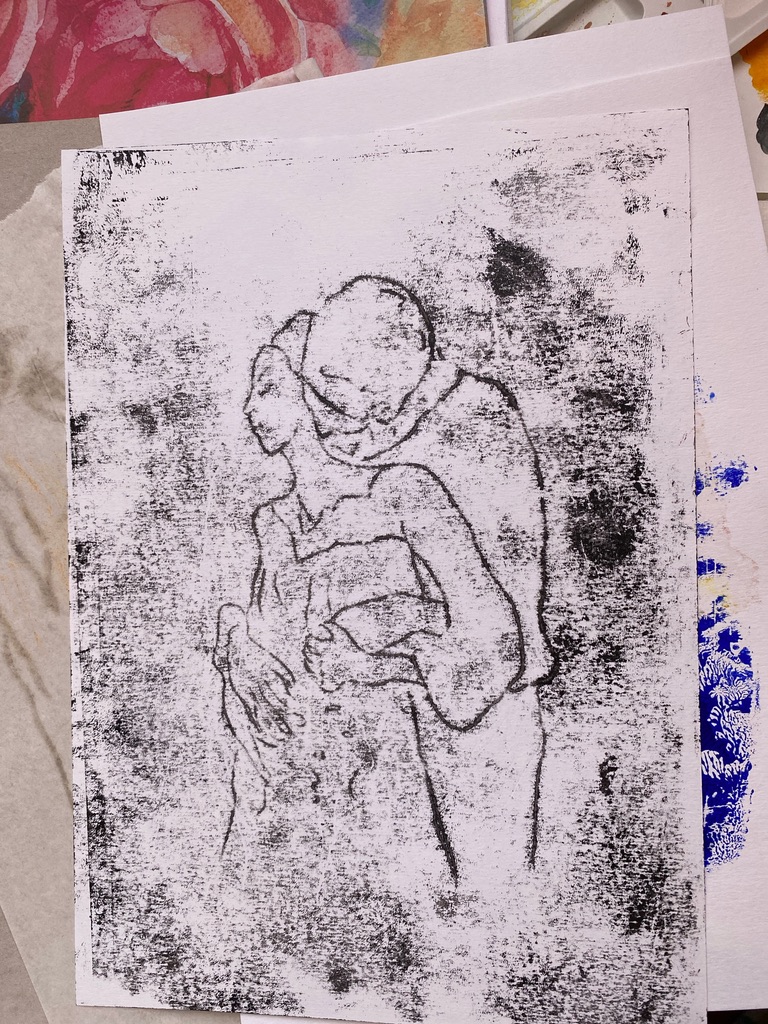
U talasu.
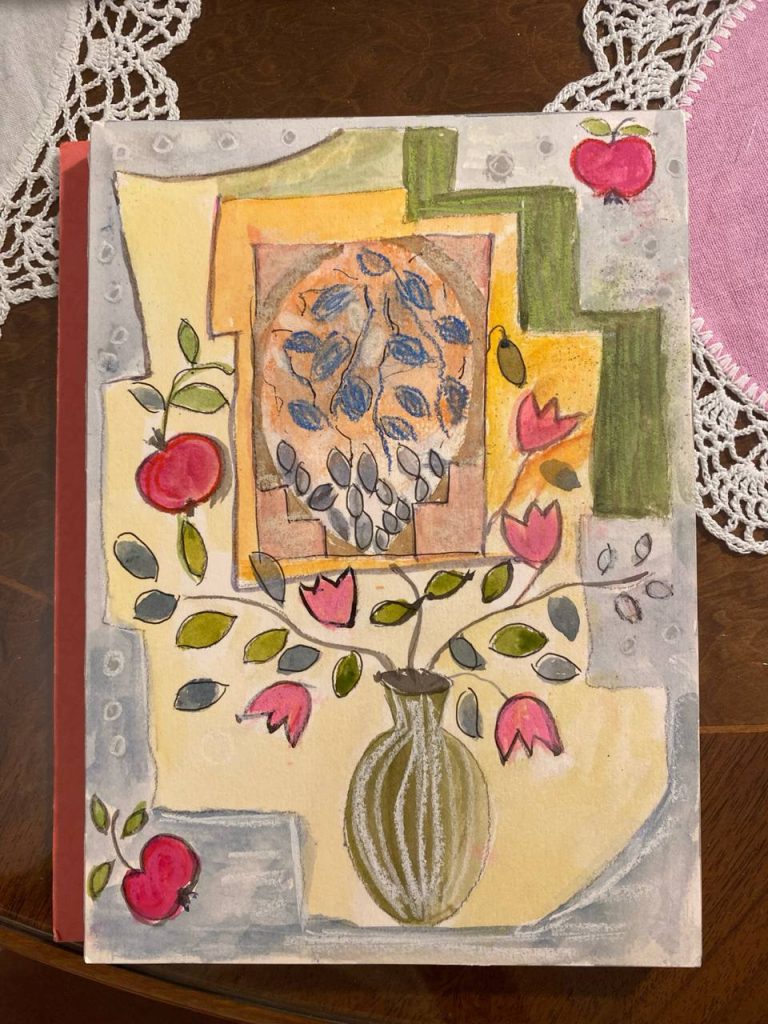
Mixed media na papiru, 15 × 21 cm.
When, in disgrace with fortune and men’s eyes,
I all alone beweep my outcast state,
And trouble deaf heaven with my bootless cries,
And look upon myself and curse my fate,
Wishing me like to one more rich in hope,
Featured like him, like him with friends possessed,
Desiring this man’s art and that man’s scope,
With what I most enjoy contented least;
Yet in these thoughts myself almost despising,
Haply I think on thee, and then my state,
Like to the lark at break of day arising
From sullen earth, sings hymns at heaven’s gate;
For thy sweet love remembered such wealth brings
That then I scorn to change my state with kings.
by William Shakespeare
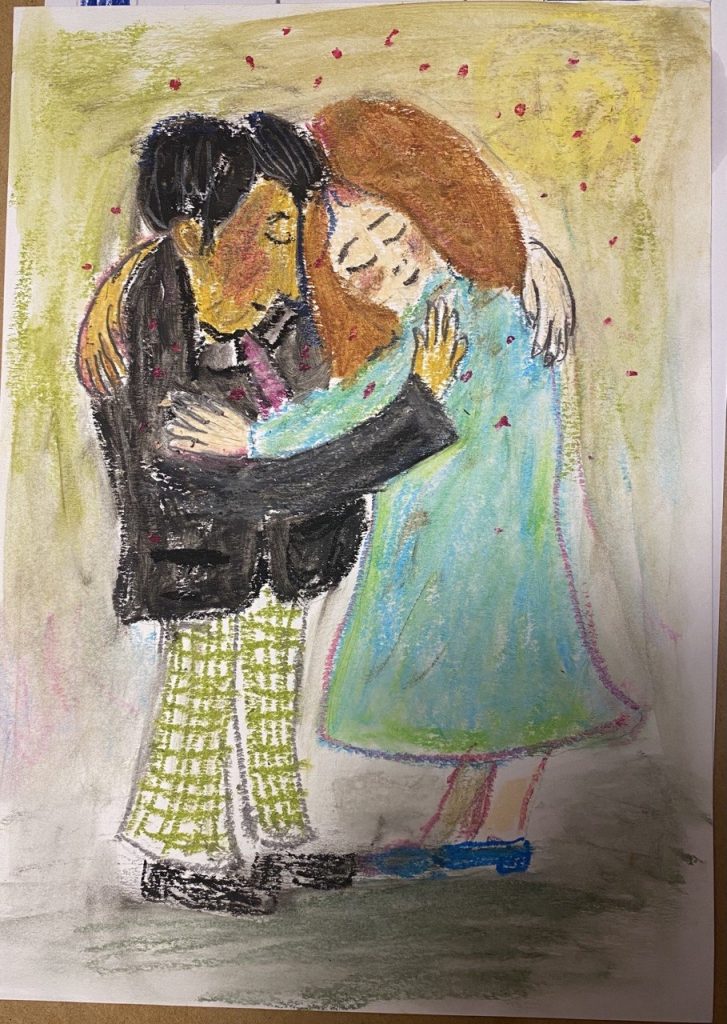
susret
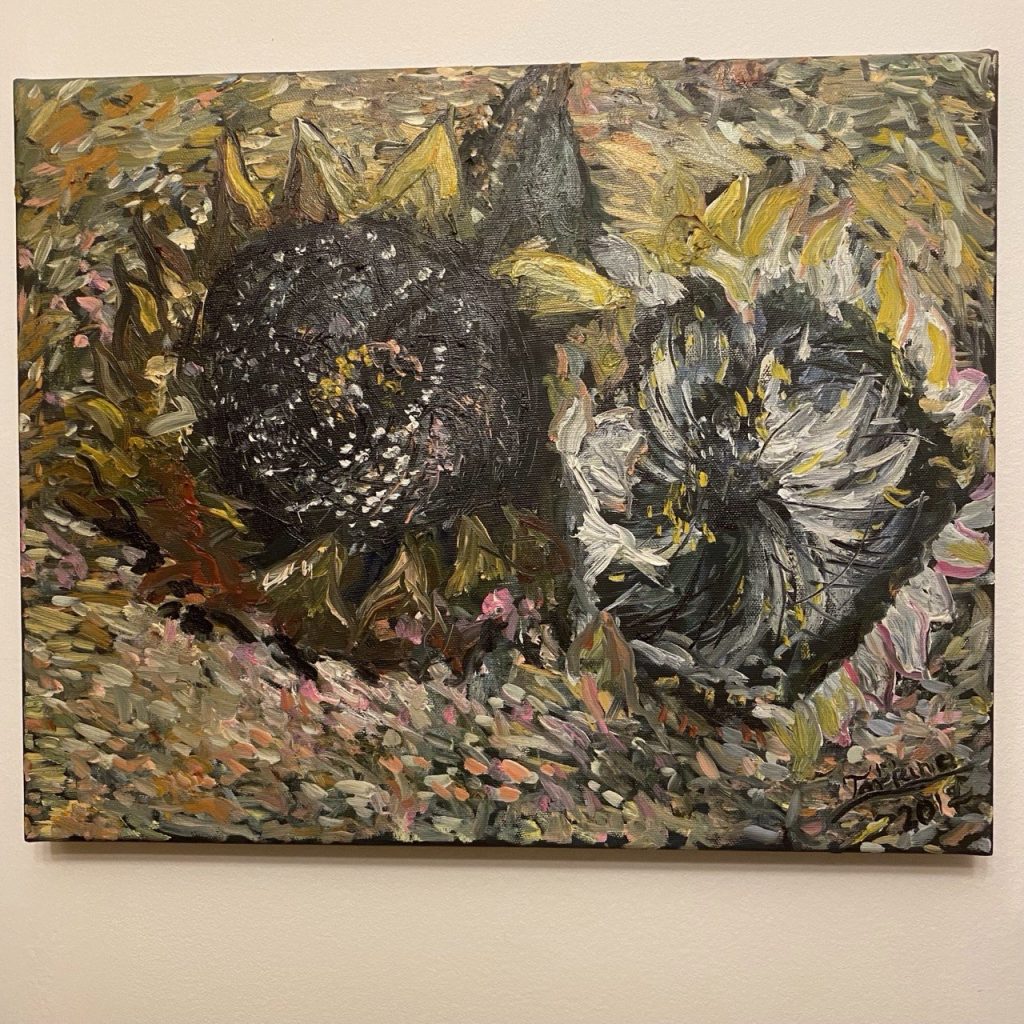
Years ago, I used sunflower as a password.
I never told anyone what it meant. The funny thing is, I didn’t really know myself.
It wasn’t a person, a place, or some secret story. I simply loved Van Gogh. I still think he may be the greatest painter who ever lived.
At the time, painting was somewhere inside me, but it hadn’t found its way out yet.
Years later, it did.
These sunflowers came from looking at his — and then going somewhere else entirely. Mine turned dark.
Perhaps some words know things about us before we do.
If you can keep your head when all about you
Are losing theirs and blaming it on you,
If you can trust yourself when all men doubt you,
But make allowance for their doubting too;
If you can wait and not be tired by waiting,
Or being lied about, don’t deal in lies,
Or being hated, don’t give way to hating,
And yet don’t look too good, nor talk too wise:
If you can dream—and not make dreams your master;
If you can think—and not make thoughts your aim;
If you can meet with Triumph and Disaster
And treat those two impostors just the same;
If you can bear to hear the truth you’ve spoken
Twisted by knaves to make a trap for fools,
Or watch the things you gave your life to, broken,
And stoop and build ’em up with worn-out tools:
If you can make one heap of all your winnings
And risk it on one turn of pitch-and-toss,
And lose, and start again at your beginnings
And never breathe a word about your loss;
If you can force your heart and nerve and sinew
To serve your turn long after they are gone,
And so hold on when there is nothing in you
Except the Will which says to them: ‘Hold on!’
If you can talk with crowds and keep your virtue,
Or walk with Kings—nor lose the common touch,
If neither foes nor loving friends can hurt you,
If all men count with you, but none too much;
If you can fill the unforgiving minute
With sixty seconds’ worth of distance run,
Yours is the Earth and everything that’s in it,
And—which is more—you’ll be a Man, my son!
by Rudyard Kipling
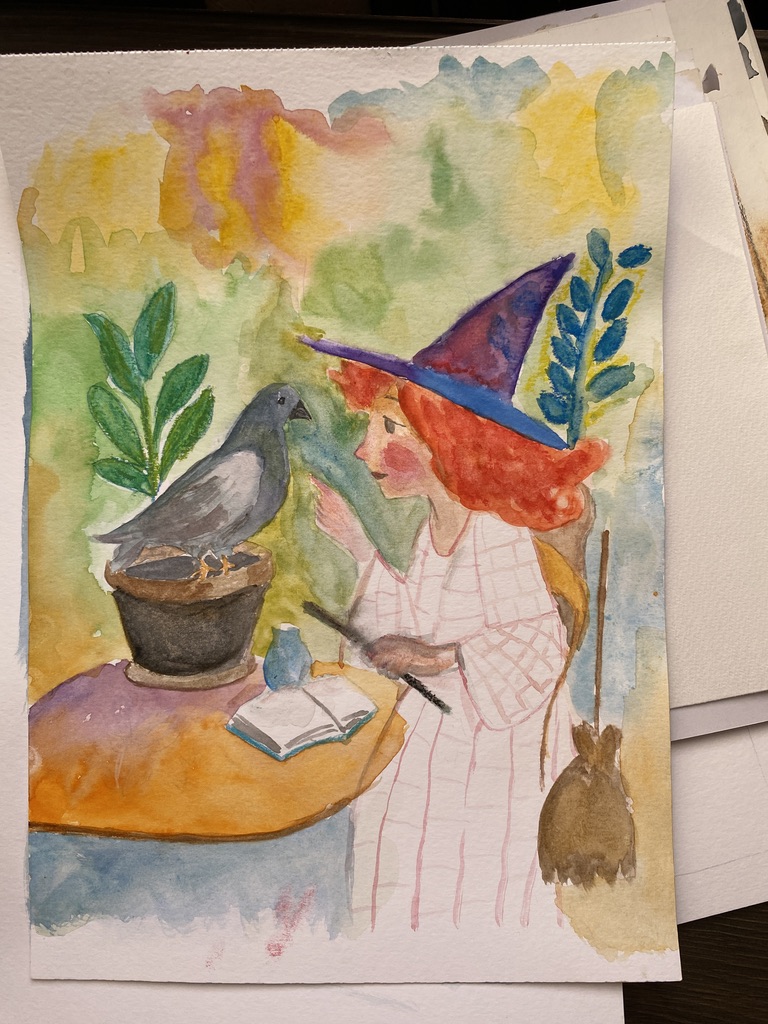
Back then, butterflies.
Armies of them.
Untrained. Overconfident.
They mistook adrenaline for destiny.
They arrived early.
They stayed too long.
They made a lot of unnecessary suggestions.
Then, for a while, nothing.
No fluttering.
No echo.
Just a calm room.
A chair.
A window doing its job.
No one was heartbroken.
Nothing had gone wrong.
Some chapters simply close without applause.
And apparently, butterflies don’t disappear forever.
They come back differently.
Fewer this time.
Better organized.
They wait.
They observe.
They seem to understand context.
They don’t ask for guarantees.
They don’t wave red flags.
These days, the butterflies arrive quietly and take notes.
The planet is not a backdrop.
It’s a system.
Ocean currents move heat, not opinions.
When they weaken, balance weakens with them — and the consequences don’t negotiate.
At the same time, we still look at maps and think in possessions.
We confuse projections with reality, size with power, desire with right.
“I want what you want” is not a strategy — it’s a misunderstanding of scale.
The Earth doesn’t respond to ambition.
It responds to physics.
As a child, I wanted to be a journalist or an astronaut.
Now I understand why:
one observes from within, the other from a distance.
Both are about seeing the whole, not owning a part.
What matters is not control.
It’s attention.
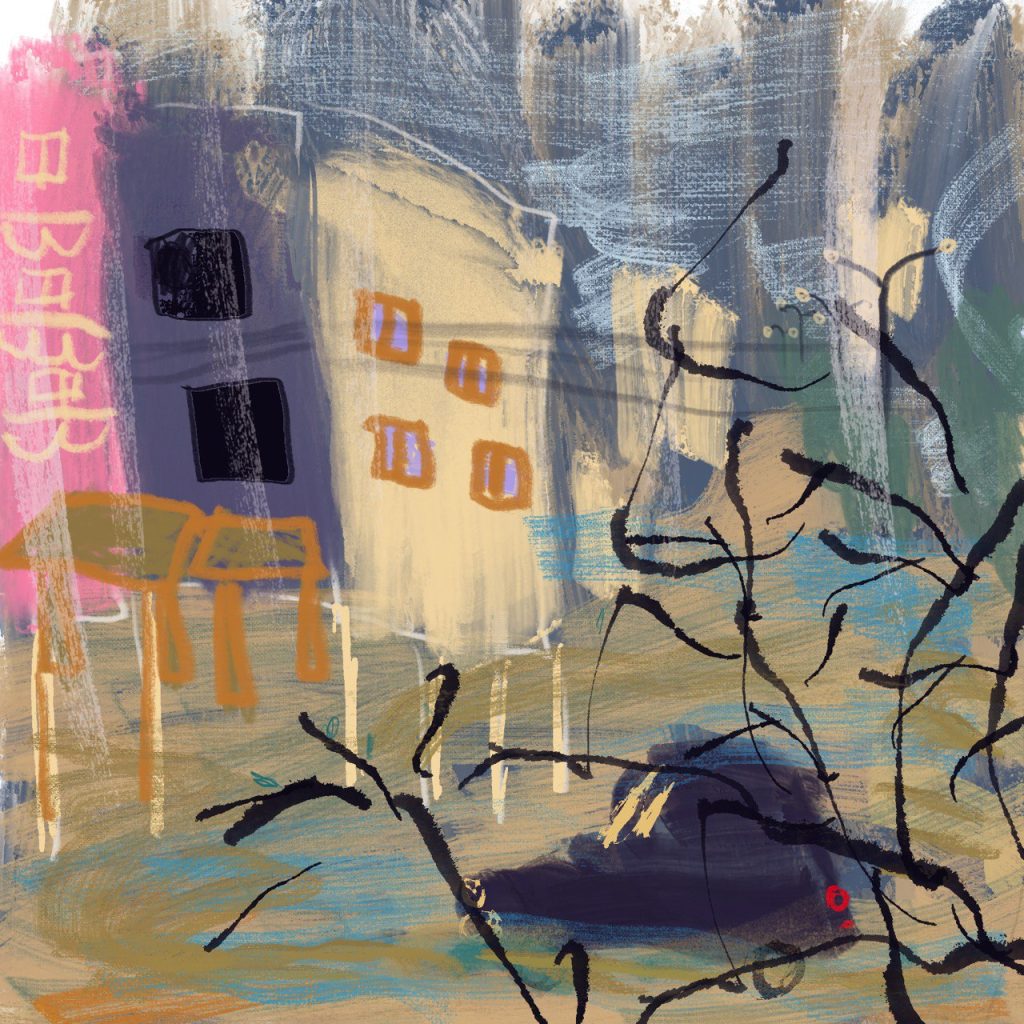
Burnout happens when observation turns into performance.
When presence becomes proof.
I’m not interested in being visible at any cost.
Visibility is not meaning.
The essential practice is simple:
observe and record.
Systems measure what fits them.
They don’t measure depth.
Some work arrives early.
Some people, too.
Art doesn’t need to shout to exist.
It only needs to be honest — and held by those who recognize it.
That’s enough.