Cute houses, made of chocolate.
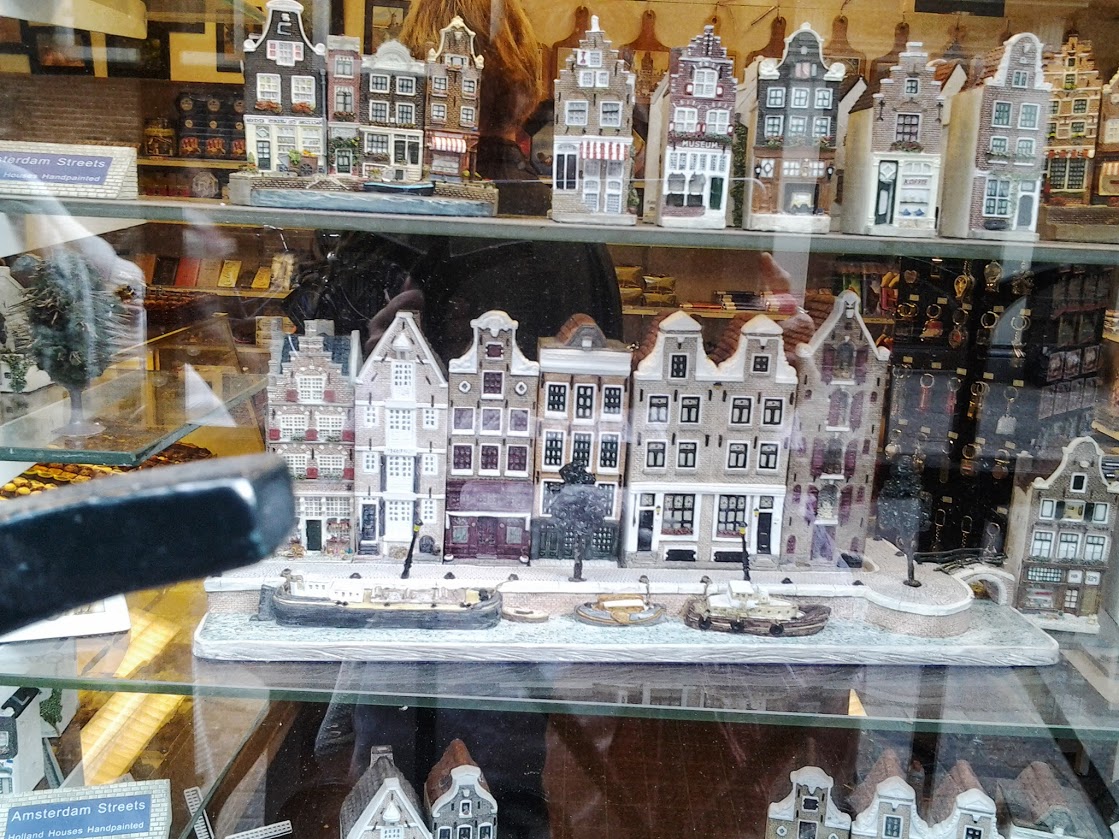
Doll house
Reply
Cute houses, made of chocolate.
“Who has told you this?,” Satyabrata Dam at TEDxBeloHorizonte.
I’ll remember this speech because of this sentence.
Same sentence is something my mom has told me once.
Very true.
First photo on the left was taken shortly before the WWII began, it was maybe 1939.
Second photo is taken, I would say in 1953.
On the first photo there are 6 persons, no one is alive today. Bald man on the right was my grand-grand-father, shot by the Germans in the prison camp. He had red hair. Then, next to him are: his wife and two daughters (his wife is woman with a big belly, daughters are the slim ones, and they both had red hair, which I proudly have too). And then, swarthy man is my grandfather. Next to him is my grandmother, daughter of my grand-grand-father. Kid on the left was my grandmother’s brother – he would become famous car maker and mechanical engineer. I found this photo striking, because it kind-of shows, a groom and his to be bride in the spring, when everything is blooming and life is rushing. You can feel that weather was nice, and like they say “Love is in the air”.
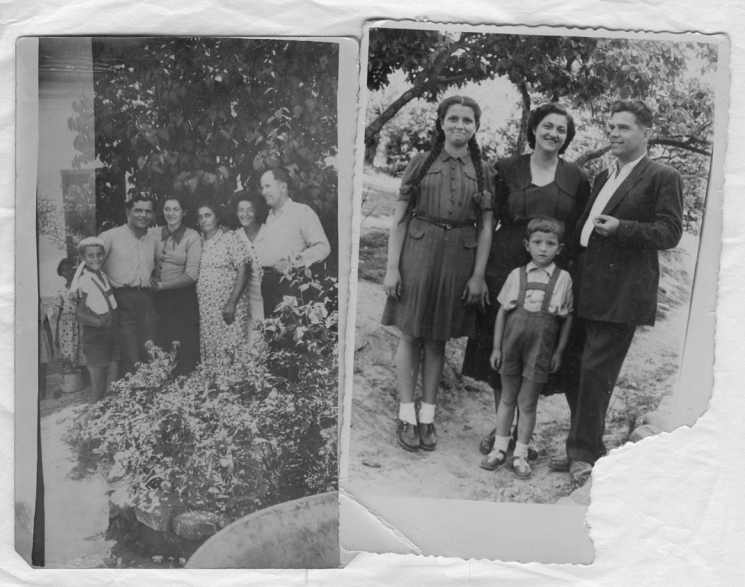
Second photo is taken probably in 1953.
It was taken when a lot of things had happened, some I know from the stories they’ve told me.
On that photo, there is that swarthy man with his — now wife and two kids. During the whole time of the war (1941-1945), he was in the prison camps in Germany.
My grandfather, as the soldier of the King’s Army, was taken to Germany to the camps, and that is what is “Statement of two witnesses” about.
So-called – “Statement of two witnesses” proves that my grandfather was during the war time in the prison camps in Germany: Lübeck, Nürnberg, Hammelburg and Hohenfels.
I also found 38 different papers — Goverment decisions, which were about his job displacements. He traveled to the different cities, worked there as they decide. He was not with his wife. So, during the war, and later, he couldn’t be with her. He had University diploma, and she was a teacher. She had a job and lived in a small town with her kids, and he was sent from one place to the other. With no complaints. Because, he was under suspicion that he might be Russian spy as the intellectual before war. Many of his friends finished on Goli otok (that was a camp made in Yugoslavia for political prisoners).
And the love story…
Love story between my grandfather and his wife. I know about his rage, he pulled her red hair, strands of red hair were on the floor. Tears and that happened before the second photo.
And my grandfather never beat anyone, he was kind man. I remember that he used to go for a walks. He had his thoughts, I could call him for years, I couldn’t reach him. He was so deeply thinking about something, like he was on another planet.
I know that they moved from that town to another; he fell in love with a river Una; went on a fishing regularly, spent a fortune on his hooks and fishing equipment.
I have all those hooks and stuff. And, I am also trying to rectify some “injustice” that life places in front of us.
Writer of Everything is Illuminated, great movie and great book.

Gradove treba projektovati za ljude i oko ljudi, a ne oko automobila!
We had a discussion in my High school literary class. How do the people behave in the funeral cortege? People next to the coffin are sad, in tears, with slow movements, sobbing, and usually family members. Then follows people who are silent and watching in front of them, then people watching a bit around, then some people who talk a little, and people that have some conversation and at the end there are people who even tell jokes and laugh.
When we had this class I was young, and I found this discussion strange. But as I am older and I have experienced sorrow and life strokes to its fullest, I see it with different eyes. That story is true.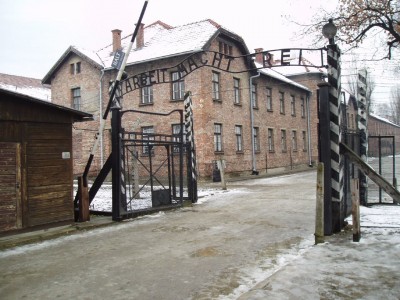
In Kertész’s essay “Who Owns Auschwitz?”, I found great observations regarding kitsch. In Young’s explanation about choosing the memorial design I found something strange that annoys me. How come that the same people choose the most important memorabilia monuments on the Earth? Because, my emotions are not the same as anybody else’s. Choosing the best fit monument, to me looks like job survey. The great example, is the “disappearing monument” in Kassel. Graffiti with Jewish stars, Nazi’s swastika, various drawings that appeared on the surface of this monument – that finally disappeared, wanted to represent memory that is stick into our souls and hearts for ever. But what about future generations, people born after 1993. There is no monument, no sign, just maybe some photo of couple in love.
What about the young couple making love before being gassed – fully aware of their destiny. No chance to make children, to tell their story, to make love just another time.
Kertész’s essay covers his observation about two movies “Schindler’s List” and “Life is beautiful”. I saw both of them. I like his conclusion about Benini that, “He has and has the courage (and also the strength) to lay his claim to this sad inheritance.” That is very true. We all have to know. There is no happy ending of Holocaust story. There are numerous stories about this. No need to repeat those.
I can only lay out my impression. It is a life time burden for person who survived; it took Nechama 30 years of waiting and growing up the idea to tell her story. All the stories that came from people who had the courage to face their personal horrible Holocaust history, they came straight from their heart. And we have to listen and remember. Understanding is inapprehensible to the evil to its fullest. It really happened. It is impossible to describe the stench in the air, or rape with a stick, naked in front of everybody, when something pushes you to watch and to float into some safe haven of your own, not knowing your own destiny, waiting for the mercy of some PERSON in charge of the lives, who treats people as no-people. It is insulting to sugar coat it.
We have various forms to pass it on – art in all its forms and retelling the stories.
So the big question “Who Owns Auschwitz?”. We all do. It is our duty to pass the story, to remember and never to happen again. Not to allow them end in the air as the Jewish grave.
Resistance as described in dictionary is:
I fully agree with Rita Steinhardt Botwinick’s debate about the resistance in “A History of the Holocaust – From Ideology To Annihilation” Ch 10 para 2:
“In the context of Jewish Opposition to the Nazis, the term resistance requires some definition. Does the word refer only to organized combat, such as military action or does it include individual assaults against the Germans? Is the use of weapons required or is nonviolent opposition rightfully classified as resistance? Is it appropriate, as has been suggested, that survival itself was a form of resistance, because the Nazis sought the death of EVERY Jew? Surely, the Jewish men and women who fought as members of partisan organizations were resisters. How should one characterize the workers in ghettos and in slave labor camps who sabotaged the economic enterprises of the Nazis by producing flawed goods? What of the Jewish writers who risked their lives to publish forbidden newspapers and teachers who secretly defied the Gestapo when they secretly instructed their students? The illegal smuggling of food delayed the total collapse of ghetto life and was frequently carried out by children. Did they not offer resistance? The historian Emanuel Ringelblum and others collected and preserved information on the fate of ghetto Jews in defiance of orders. Art and music, as well as poetry, expressed opposition to the Nazis in the ghettos and camps. Clearly, resistance had many forms, and it is necessary to establish its definition as used in this text.”
So in that context there were various forms of resistance and examples for each case:

Resistance in camps
Story about Rudolf Vrba, an inmate in Auschwitz, was very interesting. He was interviewed in Shoah, and I noticed that his storytelling was sort of detached. I think that he learned that attitude, because he spent exceedingly long time in the camp. It was from June 1942 till his escape April 1944. He calculated 1,750,000 Jews were killed in Auschwitz during his stay, and that number was often disputed. He survived thanks to his youth and physical stamina, assigned jobs in Auschwitz gave him opportunity to access extra supplies and food. After information from Kapo that 1 million Jews from Hungary will come to the camp, he escaped with Alfréd Wetzler, whom he knew from Trnava. That information was crucial. He understood that he has to escape and try to inform alive Jewish government in exile about real nature of Auschwitz camp.
Obviously, this subject of resistance is very wide.
I would like to conclude with this last one – after the Holocaust
Survivors of the Holocaust, their successors, we, and all the future generations should be part of resistance to Holocaust.
The purpose of telling the stories, retelling them and keeping those in memory, learning about these events, trying to understand – because perpetrators were humans like each of us, is also a form of resistance. Because, man doesn’t have two hearts. We do not have one heart – one for love and another for hatred. Trying to depict resistance and all these events regarding Holocaust can help us to explain mechanisms that led to it. My mission would be to try to explain to all those who don’t know.